At the edge of Asia, the mountains, highlands and plains of Laos stretch out around a dense network of rivers. Among them, the Nam Theun offers exceptional hydropower potential. It is in this landscape that one of the country’s major energy projects emerged in the early 2000s: the Nam Theun 2 hydroelectric power plant.
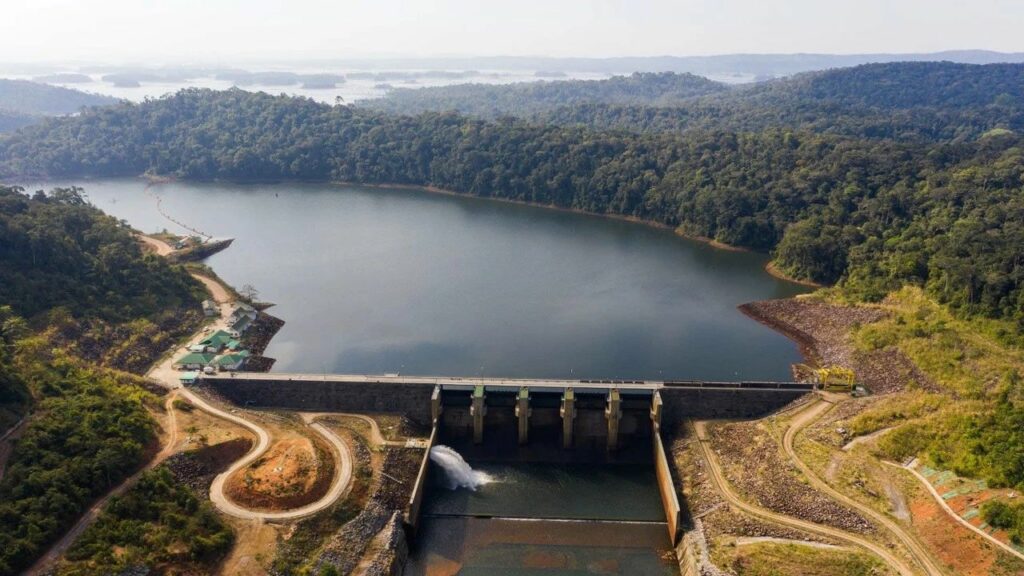
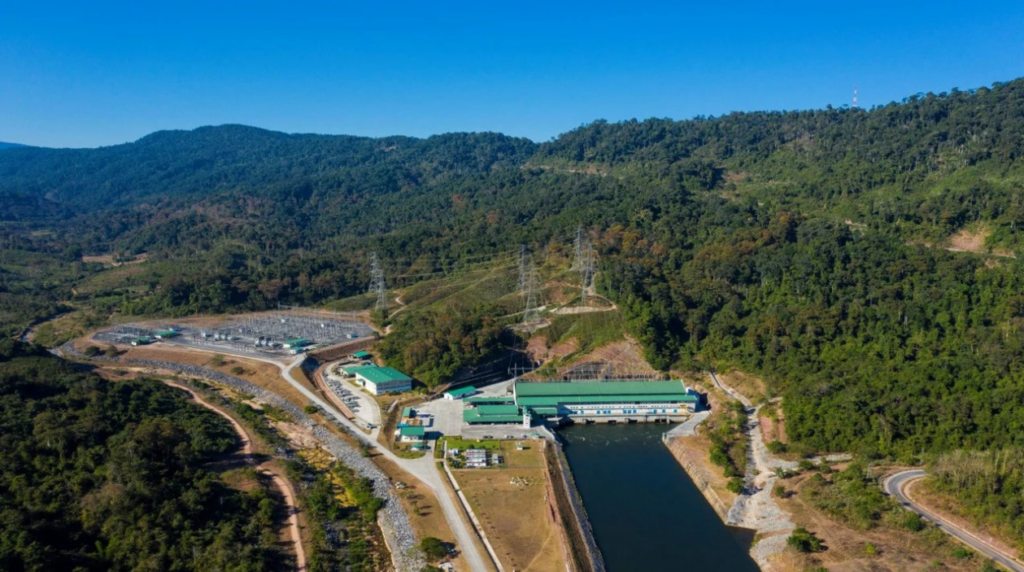
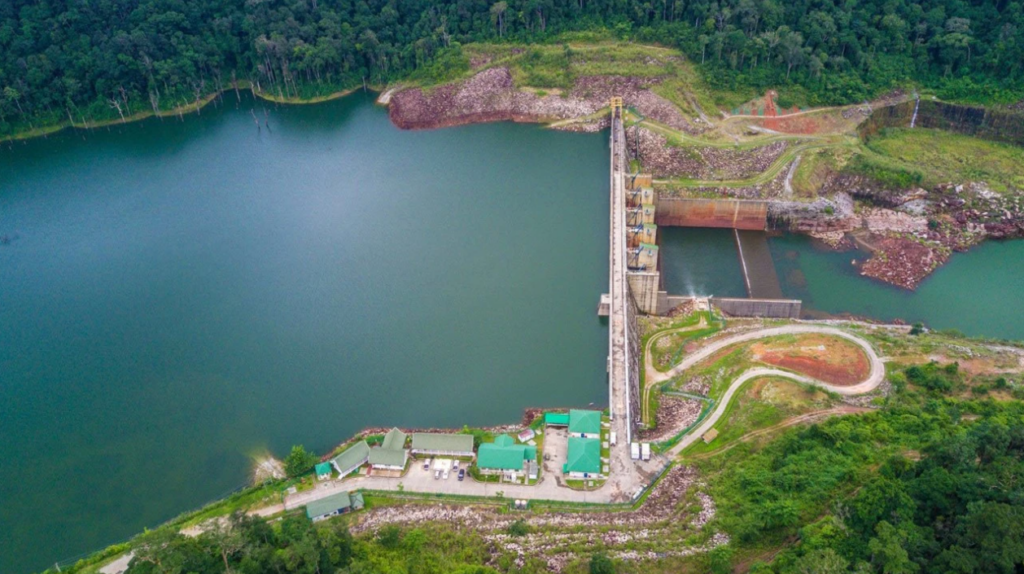
A visit to the reservoir’s shores reveals the scale of the Nam Theun 2 site. The power plant is based on a vast water surface of 489 km², capable of storing up to 3.9 billion m³ of water during peak monsoon season. The 40-meter high, 436-meter long dam blends into the landscape. Nam Theun 2 is not merely a dam or a plant; it spans three provinces of Laos, with each region playing a crucial role.
- In Bolikhamxay, the dam retains the watershed’s waters on the Nakai plateau, forming a large reservoir.
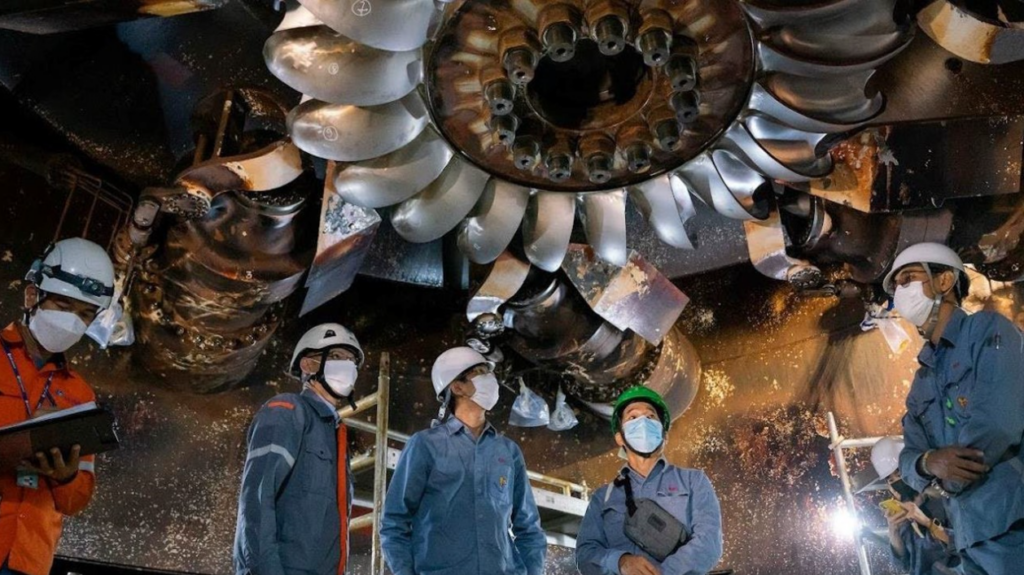
- Khammouane hosts the hydroelectric plant, located downstream in the Xe Bang Fai valley, which operates six turbines: four Francis turbines of 250 MW for export to Thailand and two Pelton turbines of 40 MW serving the domestic Lao market.
- In Savannakhet, Nam Theun 2 has constructed and operates a 140 km electricity transmission line to the delivery point at the Thai border, completing a major regional energy corridor.
Together, these infrastructures enable an annual production capacity of up to 6 TWh, aligned with monsoon cycles and seasonal changes. Nam Theun 2 stands as one of the pillars of the Lao energy sector, both territorially and in terms of installed capacity.
A project anchored in Laos’ energy history
The hydroelectric story of Nam Theun 2 began long before its commissioning. Interest in the Nam Theun River and its potential dates back to 1927. By the 1990s, it became clear that the site was suitable for a large-scale hydraulic development.
The plant was commissioned in 2010, marking a new chapter for Laos and its surrounding communities.
In early 2024, the plant reached a significant milestone with the completion of its first major overhaul since launch. This crucial phase prepares for decades of continued operation.
Supporting communities and protecting a unique environment
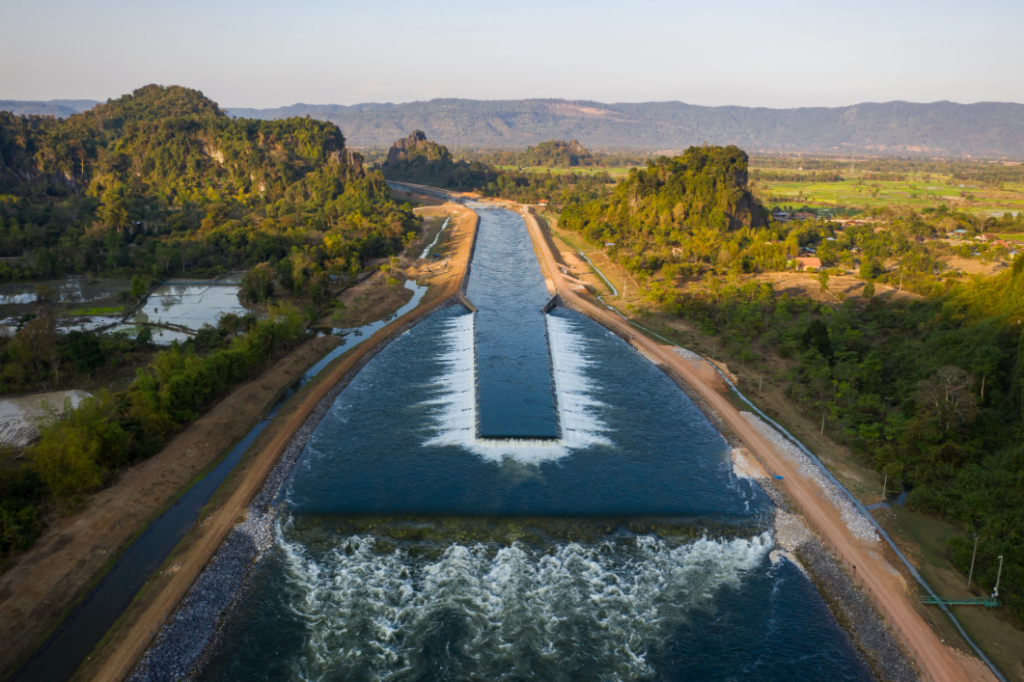
On the Nakai plateau, the villages bordering the reservoir reflect the extent of landscape transformation. 32 schools and daycare centers, two health centers, and over 270 km of roads and bridges were constructed. Irrigation systems installed downstream of the dam now enable two rice harvests per year, permanently changing local agricultural practices. Training programs in fishing, mechanics, agriculture, and hospitality have also been launched to promote economic independence and support job evolution.
“Nam Theun 2 is not just an energy infrastructure; it’s a territorial project built with and for the communities surrounding the plant.” Patrick Charignon, Asia Pacific Director of EDF power solutions
Surrounding the reservoir, the watershed has been classified as the Nakai-Nam Theun National Park, one of the country’s most biodiverse areas. NTPC undertakes various preservation actions such as protecting wild elephants, combating poaching, and monitoring endemic species. Even before the reservoir was filled, an environmental laboratory was established. Today, around twenty employees work there, collaborating with international researchers.
In operations: ensuring safety, evolving the plant, and striving for excellence
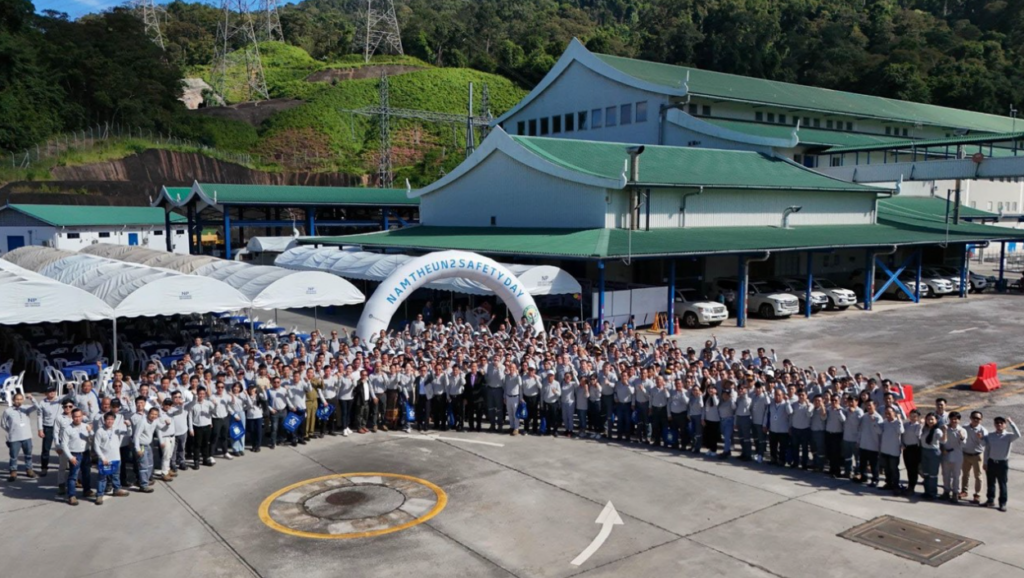
Safety is a constant priority on site. Marc-Antoine Rupp, CEO of NTPC, emphasizes this daily commitment: “Our priority remains unchanged: to guarantee safe and exemplary operations while anticipating the technical advancements needed for the years ahead.”
In this ongoing effort, NTPC is also pursuing a broad certification program covering health & safety, hydraulic security, sustainable development, cybersecurity, and ethics & compliance. After obtaining the ISO 37001 Anti-Corruption certification in 2024, Nam Theun 2 received the ISO 27001 certification for information security, cybersecurity, and privacy protection in 2025, aiming for certification by Lao authorities in hydraulic security in 2026.